Posted on Fri 21 August 2020
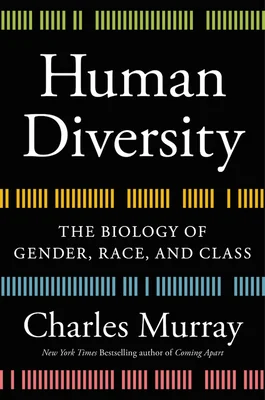
Murray propose ten theses in this book. Some or all may be controversial, but he presents solid evidence for all of them. He goes on to argue that we should not tie our value judgements to attributes that may largely be due to genetic luck (such as intelligence) and instead treat everyone equally no matter their differences.
The ten theses:
Sex differences in personality are consistent worldwide and tend to widen in more gender-egalitarian cultures. On average, females worldwide have advantages in verbal ability and social cognition while males have advantages in visuospatial abilities and the extremes of mathematical ability. On average, women worldwide are more attracted to vocations centered on people and men to vocations centered on things. Many sex differences in the brain are coordinate with sex differences in personality, abilities, and social behavior Human populations are genetically distinctive in ways that correspond to self-identified race and ethnicity. Evolutionary selection pressure since humans left Africa has been extensive and mostly local. Continental population differences in variants associated with personality, abilities, and social behavior are common. The shared environment usually plays a minor role in explaining personality, abilities, and social behavior. Class structure is importantly based on differences in abilities that have a substantial genetic component. Outside interventions are inherently constrained in the effects they can have on personality, abilities, and social behavior.
| italics | surround text with *asterisks* |
| bold | surround text with **two asterisks** |
| hyperlink | [hyperlink](https://example.com)or just a bare URL |
code | surround text with `backticks` |
surround text with ~~two tilde characters~~ | |
quote | prefix with > |
Loading comments...